
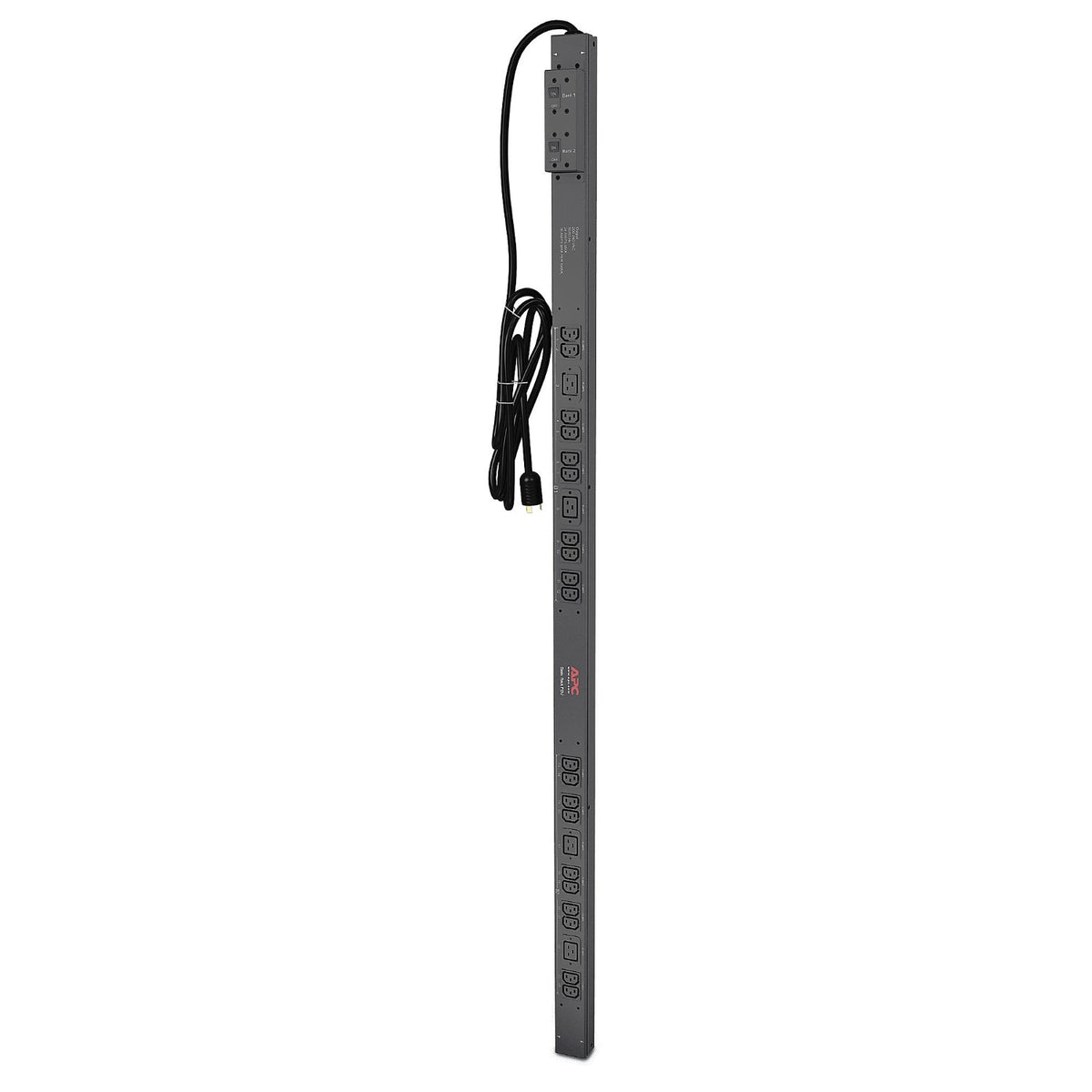
Half the questions we get about power come down to one thing: which connector is on the wall, and which is on the equipment. This chart covers the ones that actually turn up in racks and network closets.
NEMA: the plugs on the wall
NEMA numbering looks cryptic but reads simply. A leading L means locking (twist-lock). The first number is the configuration, which sets voltage and whether there's a neutral. The number after the dash is the amperage. So L5-30 is a locking, 125V, 30A connector.
| Connector | Volts / amps | Where you see it |
|---|---|---|
| 5-15P / 5-15R | 125V, 15A | The ordinary wall outlet. Most small gear. |
| 5-20P / 5-20R | 125V, 20A | T-shaped slot. The receptacle takes 5-15P plugs too. |
| L5-20P / L5-20R | 125V, 20A | Twist-lock 20A circuits in closets and server rooms. |
| L5-30P / L5-30R | 125V, 30A | Dedicated 30A rack circuits. Common on larger PDUs. |
| 6-20P / 6-20R | 250V, 20A | Straight-blade 208/240V, less common in racks. |
| L6-20P / L6-20R | 250V, 20A | Twist-lock 208V. Data center racks. |
| L6-30P / L6-30R | 250V, 30A | The workhorse 208V rack circuit. |
| L21-30P / L21-30R | 120/208V three-phase, 30A | Three-phase PDUs in data centers. |
Reading a receptacle: round with curved slots means twist-lock. A T-shaped slot means 20A. Two horizontal slots and no vertical one usually means 250V. When in doubt, photograph the receptacle and the breaker and send it to us.
IEC: the connectors on the equipment
Inside the rack, cords are IEC rather than NEMA. Inlets on equipment are even-numbered, outlets on PDUs and UPS units are odd-numbered, and they pair up.
| Connector | Rating | Where you see it |
|---|---|---|
| C13 outlet / C14 inlet | 15A in North America | Servers, switches, UPS units. The common one. |
| C19 outlet / C20 inlet | 20A in North America | Blade chassis, large UPS units, high-draw servers. |
| C15 outlet / C16 inlet | 15A, high temperature | Looks like C13 with a notch. Used on hot equipment. |
A C14 inlet needs a C13 outlet on the PDU. A C20 inlet needs a C19. If you're buying a 208V PDU for servers, count how many of each your gear needs before choosing: a strip with 20 C13s and 4 C19s covers most racks, which is why that mix is so common.
Three rules that prevent most problems
- Never adapt up. Putting a 15A plug on a 30A circuit with an adapter means the cord, not the breaker, becomes the weakest link. Buy the PDU with the right plug.
- Adapting down is usually fine but wasteful. A 30A PDU on a 20A circuit is limited by the 20A breaker, so you paid for capacity you can't use.
- Check the receptacle before you order. A photo takes ten seconds and saves a return.
Matching a PDU to what you have
| Wall receptacle | Look for a PDU with | Example from our range |
|---|---|---|
| 5-15R | 5-15P plug, 15A, 5-15R outlets | Middle Atlantic PDX-915R |
| 5-20R | 5-20P plug, 20A, 5-20R outlets | APC AP9563 |
| L5-30R | L5-30P plug, 30A, 5-15R or 5-20R outlets | APC AP7802B |
| L6-30R | L6-30P plug, 208V 30A, C13 and C19 outlets | APC AP7541 |
Everything we stock lists its input plug and outlet mix on the product page, and you can filter by both in rack PDUs. Send us a photo of the receptacle if you'd rather have us confirm it.